Concept ProjectConcept Study in Lead Automation

AI Real Estate Lead QualificationLead Scoring & Workflow Automation

Built an AI-powered real estate lead qualification system using n8n that automatically captures inquiries, qualifies leads, updates the CRM, and sends personalized follow-up emails, reducing manual work and improving response time.

This project automates the complete lead management process for real estate agencies using n8n, Groq AI, Google Workspace, and a CRM. When a customer submits a Google Form, the workflow is automatically triggered through Google Sheets, sends a personalized welcome email, and creates a CRM record. If the customer replies, an AI agent reads the email, understands the intent, maintains conversation context using chat memory, and generates a personalized response. The AI also extracts structured information such as budget, location, property type, and buying intent, then updates the existing CRM record instead of creating duplicates. Additionally, the system monitors inactive leads and automatically sends follow-up emails after 48 hours or requests any missing information, ensuring every lead is nurtured without manual intervention while keeping the CRM accurate and up to date.
Technologies:n8nNode.jsOpenAISupabaseGmail API
Swipe →1 of 4
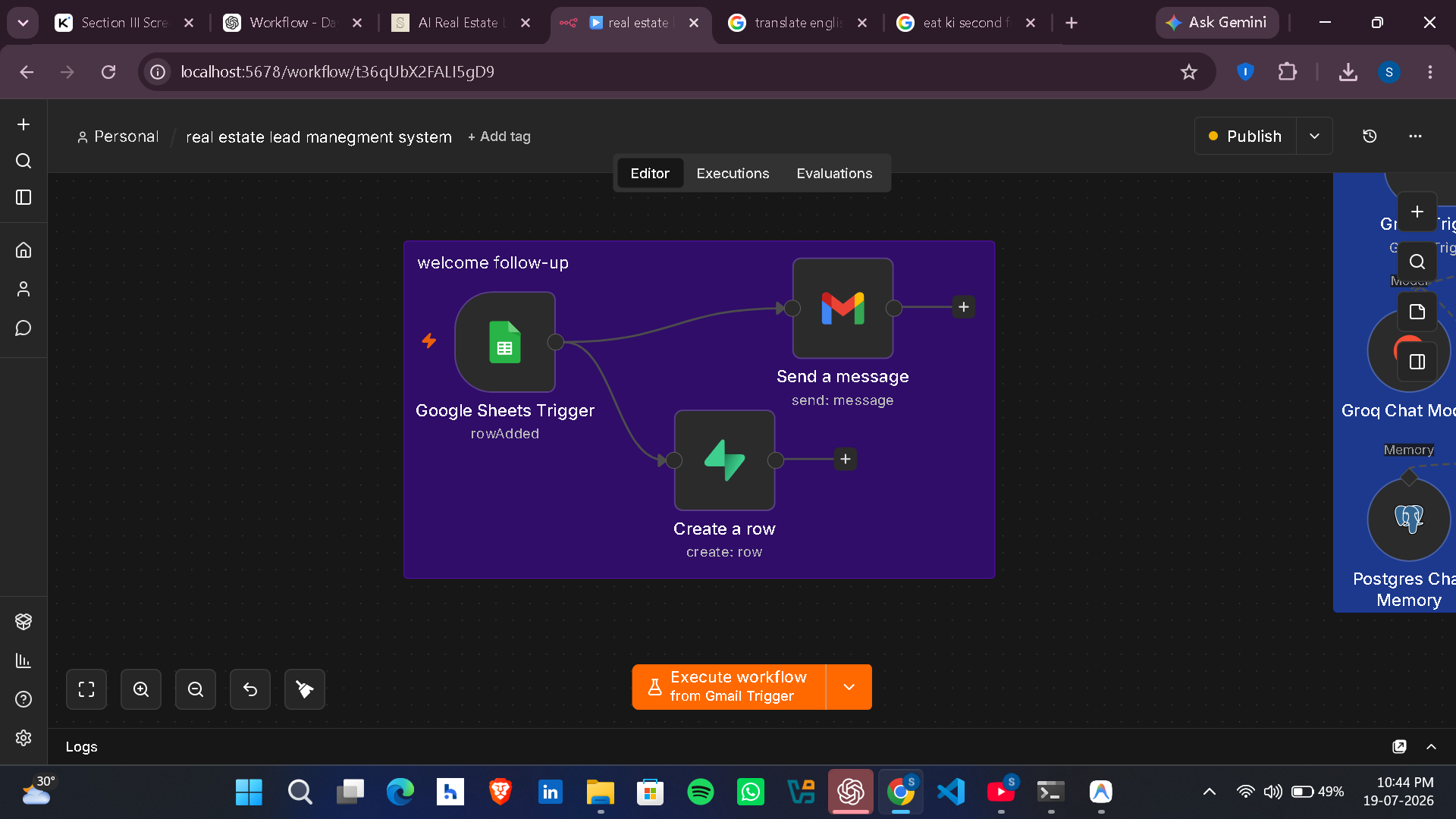
Step 1: Whenever a new lead submits the Google Form, the workflow is triggered automatically through Google Sheets. It instantly sends a personalized follow-up email

Step 1: Whenever a new lead submits the Google Form, the workflow is triggered automatically through Google Sheets. It instantly sends a personalized follow-up email

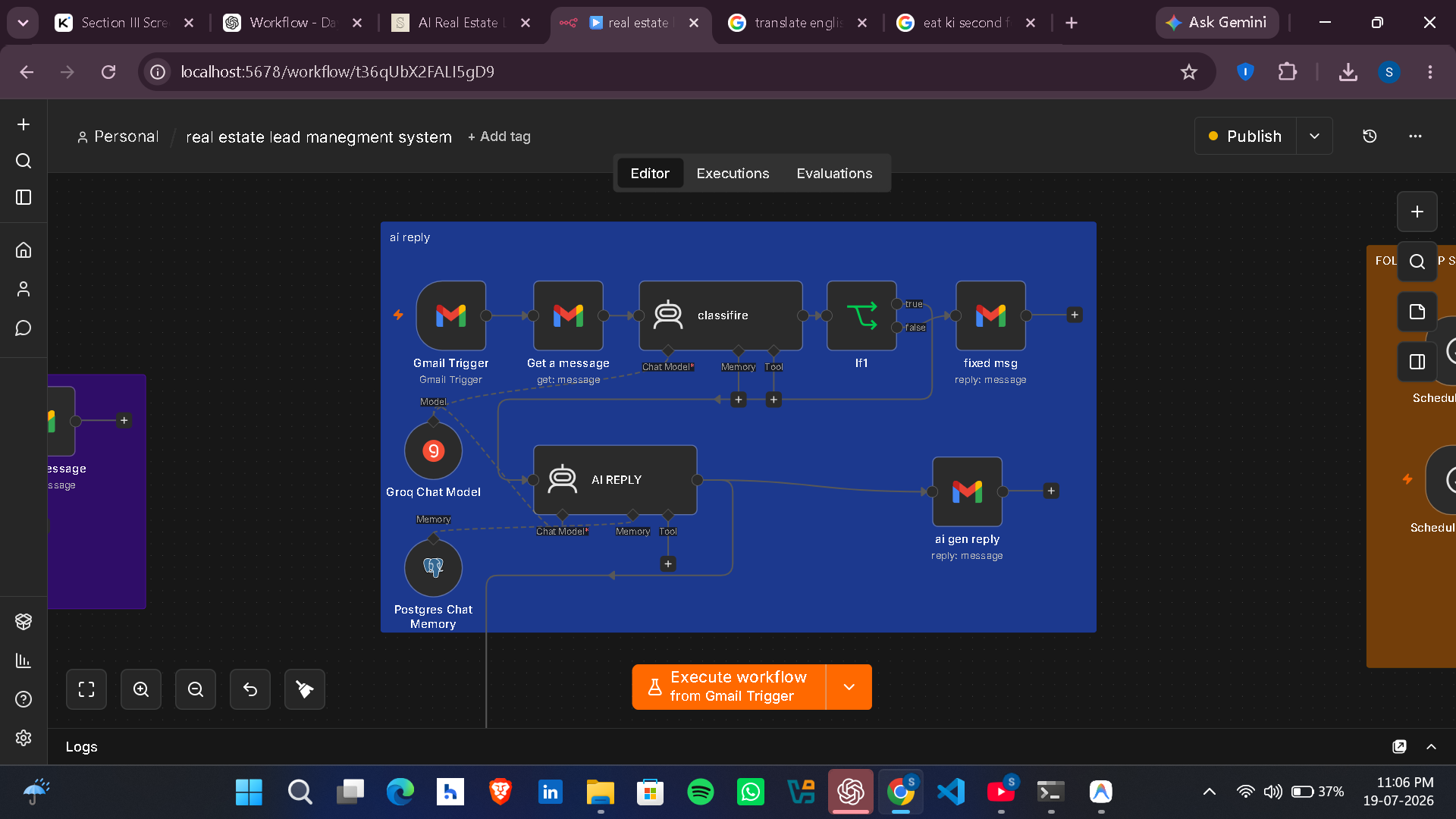
Step 2: This workflow is triggered whenever a lead replies to the follow-up email or sends a new email. The Gmail Trigger captures the incoming message, retrieves its content, and passes it to an AI agent powered by Groq. The AI first classifies whether the email is related to real estate. If it is, the AI generates a personalized reply based on the lead's questions, previous conversation, and stored chat memory, then automatically sends the response through Gmail. If the email is not related to real estate, the workflow sends a predefined message instead. This enables natural, context-aware conversations with leads without any manual intervention.

Step 2: This workflow is triggered whenever a lead replies to the follow-up email or sends a new email. The Gmail Trigger captures the incoming message, retrieves its content, and passes it to an AI agent powered by Groq. The AI first classifies whether the email is related to real estate. If it is, the AI generates a personalized reply based on the lead's questions, previous conversation, and stored chat memory, then automatically sends the response through Gmail. If the email is not related to real estate, the workflow sends a predefined message instead. This enables natural, context-aware conversations with leads without any manual intervention.

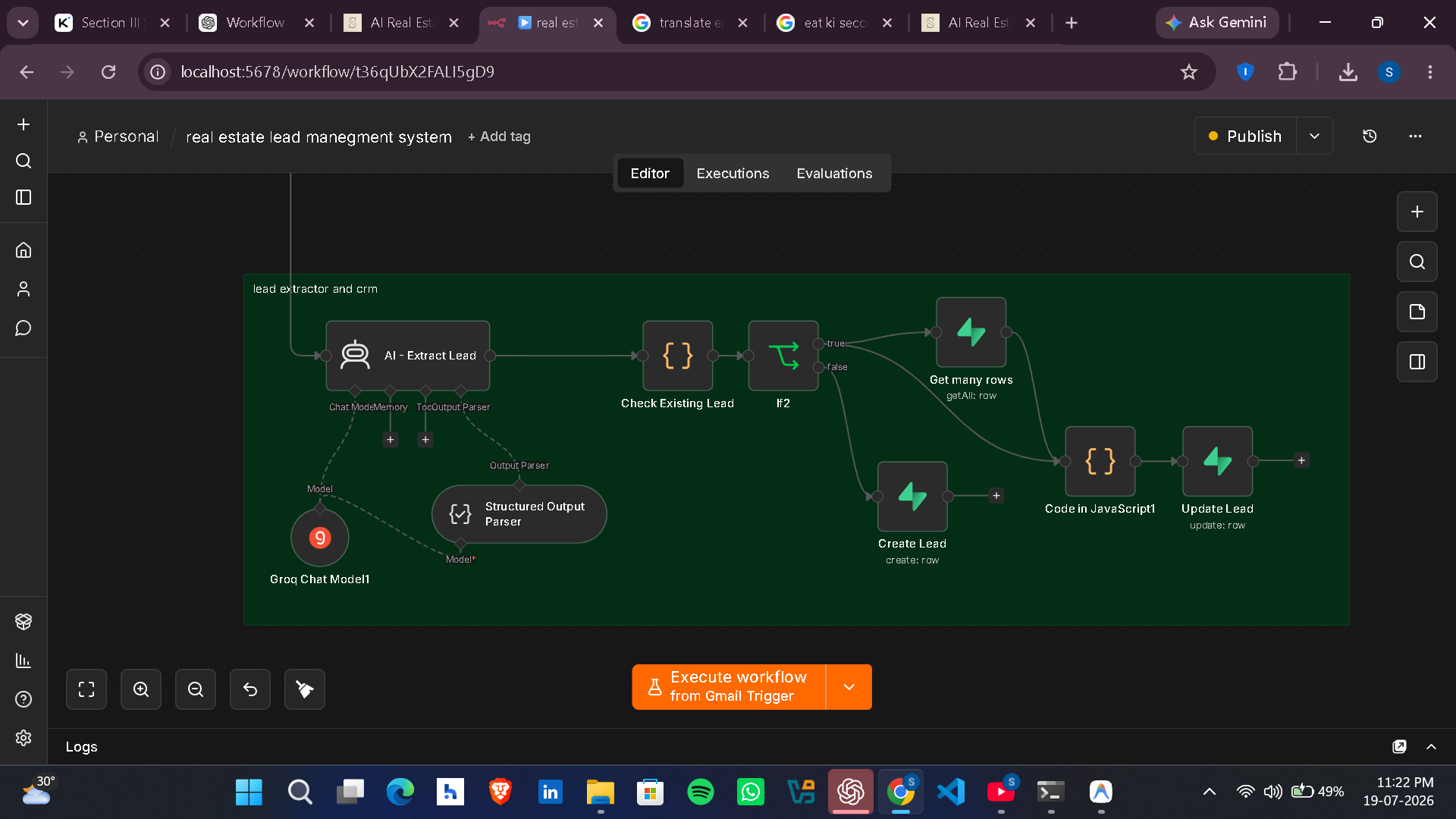
Step 3: This workflow automatically extracts important information from the customer's email using AI, such as their name, contact details, property preferences, budget, location, property type, buying intent, and other relevant requirements. The extracted data is then mapped and synchronized with the CRM. If the customer already exists in the CRM, the workflow updates the existing record with the latest information instead of creating a duplicate entry. If it's a new customer, it creates a new CRM record. This ensures the CRM always contains accurate, up-to-date information while preventing duplicate records and reducing manual data entry.

Step 3: This workflow automatically extracts important information from the customer's email using AI, such as their name, contact details, property preferences, budget, location, property type, buying intent, and other relevant requirements. The extracted data is then mapped and synchronized with the CRM. If the customer already exists in the CRM, the workflow updates the existing record with the latest information instead of creating a duplicate entry. If it's a new customer, it creates a new CRM record. This ensures the CRM always contains accurate, up-to-date information while preventing duplicate records and reducing manual data entry.

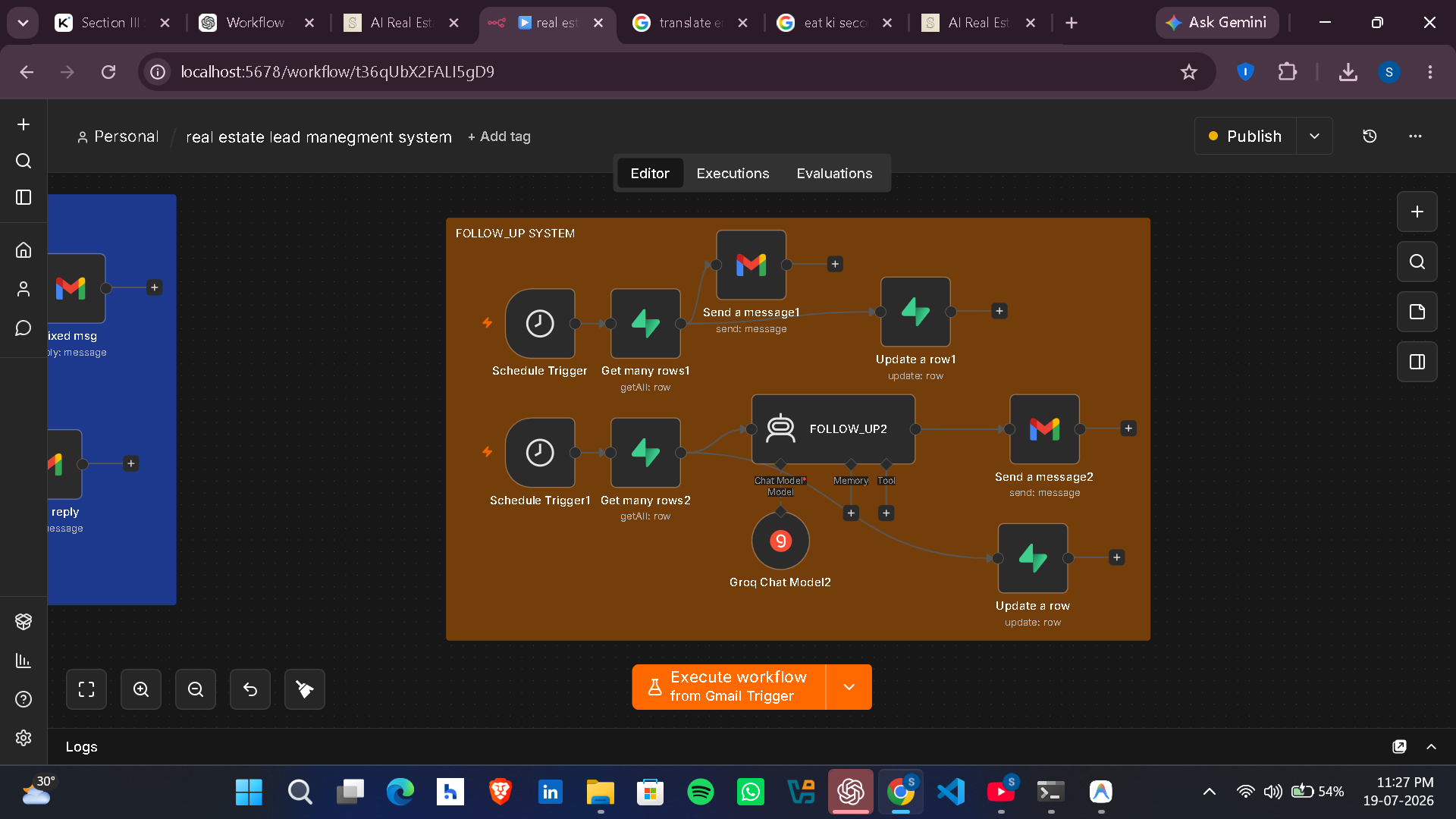
Step 4: This workflow automates the follow-up process for leads who haven't responded. If a customer does not reply within 48 hours, a scheduled workflow automatically checks the CRM and sends a personalized follow-up email. It supports two follow-up scenarios: first, reminding inactive leads to re-engage with the conversation, and second, requesting any missing information if the customer's details are incomplete. After sending the follow-up, the workflow updates the CRM to record the follow-up status and prevent duplicate reminders. This ensures every lead is nurtured consistently without requiring manual intervention.

Step 4: This workflow automates the follow-up process for leads who haven't responded. If a customer does not reply within 48 hours, a scheduled workflow automatically checks the CRM and sends a personalized follow-up email. It supports two follow-up scenarios: first, reminding inactive leads to re-engage with the conversation, and second, requesting any missing information if the customer's details are incomplete. After sending the follow-up, the workflow updates the CRM to record the follow-up status and prevent duplicate reminders. This ensures every lead is nurtured consistently without requiring manual intervention.